
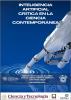
Critical artificial intelligence in contemporary science
Keywords:
critical, artificial intelligence, contemporary scienceSynopsis
Artificial intelligence (AI) has become one of the most influential axes of contemporary science, not only because of its capacity to process large volumes of information and optimize analytical processes, but also because it profoundly reconfigures the epistemological, ethical, and institutional conditions of knowledge production. Its accelerated incorporation into scientific research, technological management, education, and innovation has generated significant advances; however, it has also raised critical questions concerning authorship, responsibility, transparency, governance, and scientific legitimacy. This book starts from the recognition that AI is not a neutral technology, but rather a sociotechnical artifact that embodies values, decisions, and power relations.
Critical Artificial Intelligence in Contemporary Science is situated within this context and proposes an analytical and reflective reading of AI from a critical and interdisciplinary perspective. The work conceives AI not merely as an instrumental tool, but as a phenomenon that transforms scientific practices, institutional structures, and regulatory frameworks. From this standpoint, a critical approach does not imply technological rejection, but rather the need to understand, evaluate, and govern AI in an ethical, responsible manner oriented toward sustainable development.
The eleven chapters that make up the volume address central issues emerging from the interaction between AI and science: institutional governance and intellectual property, the ethical use of generative models in qualitative research, open innovation, inequality in access to digital infrastructures, corporate social responsibility, educational sustainability, agri-food management, the training of entrepreneurs, technological development in Mexico, articulation with local forms of knowledge, and financial dissemination. This thematic diversity reflects the transversal nature of AI and the need for approaches that go beyond fragmented or exclusively technical visions.
A distinctive feature of the book is the constant articulation between scientia and praxis. The chapters combine rigorous theoretical analyses with applied proposals, conceptual models, and institutional guidelines aimed at influencing real contexts of research, management, and decision-making. Likewise, the book engages with recent international frameworks on AI ethics and governance, incorporating a perspective situated within the Latin American and Mexican context.
Taken as a whole, this work invites a rethinking of science in the age of artificial intelligence, promoting a critical integration of these technologies that preserves the centrality of human judgment, strengthens institutional legitimacy, and contributes to a socially responsible and ethically committed science.
Downloads
Download data is not yet available.
References
Capítulo 1
Batool, A., Zowghi, D. & Bano, M. (2023). Responsible ai Governance: A Syste- matic Literature Review. arXiv. https://doi.org/10.48550/arXiv.2401.10896
Ding, W. (2025). The patentability of ai-generated technical solutions: Legal perspectives and challenges. Information, 16(8), 629. https://doi.org/10.3390/info16080629
Brittain, B. (2024, April 10). USPTO warns patent lawyers not to pass off ai inventions as human. Reuters. https://www.reuters.com/legal/litigation/uspto-warns-patent-lawyers-not-pass-off-ai-inventions-human-2024-04-10/European Commission. (2019, April).
Ethics guidelines for trustworthy ai. High- Level Expert Group on Artificial Intelligence. https://ec.europa.eu/newsroom/dae/document.cfm?doc_id=60419
Gervais, D. (2023). Avoid patenting ai-generated inventions. Nature. https://doi.org/10.1038/d41586-023-03116-0
Gong, H. (2025). A global dataset mapping the ai innovation.... Nature. https://doi.org/10.1038/s41597-025-05518-3G7. (2023, diciembre). Declaración de los Ministros de Tecnología y Medio Ambiente del G7: Marco de política integral del Proceso de ia de Hiroshima [Principios rectores internacionales para el desarrollo y uso de sistemas de ia avanzados]. Hiroshima: G7. https://www.g7hiroshima.go.jp
High Court of Justice (England and Wales). (2023, December 20). Thaler v. Secretary of State for Business, Energy and Industrial Strategy (Dabus case) [Court decision]. AP News. https://apnews.com/article/ai-inventor-patent-britain-high-courtf2ec69ada65c8e7dcf2febe814210b5a
Hötte, K., Tarannum, T., Verendel, V. & Bennett, L. (2022). Measuring artificial intelligence: A systematic assessment and implications for governance. arXiv. https://doi.org/10.48550/arXiv.2204.10304
Huda Shomee, H., Wang, Z., Ravi, S. N. & Medya, S. (2024). A comprehensive survey on ai-based methods for patents. arXiv. https://arxiv.org/abs/2404.08668
Instituto Nacional del Derecho de Autor (INDAUTOR). (2025, agosto 28). La Suprema Corte de Justicia de la Nación resolvió que las obras creadas por inteligencia artificial no pueden registrarse como derechos de autor en México. Gobierno de México. https://www.gob.mx/cultura/prensa/indautor-reconoce-la-decision-de-la-suprema-corte-de-justicia-de-la-nacion-sobre- el registro-de-obras-creadas-con-ia?idiom=es
iso/IEC. (2022). iso/IEC 22989:2022—Artificial intelligence—Concepts and terminology. International Organization for Standardization. https://www. iso.org/standard/74296.html
Kalinichenko, A. L. (2025). The effective use of artificial intelligence in patent searches. European Journal of Operational Research. https://doi.org/10.1016/j. ejor.2025.01.010
National Institute of Standards and Technology. (2023, January). ai risk mana- gement framework (ai RMF 1.0). U.S. Department of Commerce. https:// doi.org/10.6028/NIST.ai.100-1
Nieto Castillo, S. (2025). Compliance en la inteligencia artificial en marcas y patentes. Instituto Mexicano de la Propiedad Industrial. https://www. gob.mx/impi/articulos/la-inteligencia-artificial-eje-del-curso-de-verano- 2025-del-impi-y-la-ompi-399414
Penabad-Camacho, L., Penabad-Camacho, M. A., Mora-Campos, A., Cerdas-Vega, G., Morales-López, Y., Ullate-Segura, M.,Méndez-Solano, A., Nova-Bustos, N., Vega-Solano, M. F. & Castro-Solano, M. M. (2024). Declaración de Heredia: Principios sobre el uso de inteligencia artificial en la edición científica [Declaration of Heredia: Principles on the use of artificial intelligence in scientific publishing]. Revista Electrónica Educare, 28(Suplem. Especial), 1–10. https://doi.org/10.15359/ree.28-S.19967
Picht, P. G. (2023). ai and IP: Theory to Policy and Back Again. IIC – International Review of Intellectual Property and Competition Law, 54, 569–588. https:// doi.org/10.1007/s40319-023-01344-5Reuters. https://www.reuters.com/legal/legalindustry/patenting-generative- ai-technologies-opportunities-challenges-2024-11-11/
Tang, A., Wu, C., Reedy, G. & Calhoun, A. (2024). Declaring the use of generative artificial intelligence in academic research: Transparency matters. Journal of Nursing Scholarship, 56(1), 123–129. https://doi.org/10.1111/jnu.12938 unesco. (2021).
Recommendation on the ethics of artificial intelligence. unesco. https://unesdoc.unesco.org/ark:/48223/pf0000381137
unesco. (2023). Global toolkit on ai and the Rule of Law. unesco. https://unes-doc.unesco.org/ark:/48223/pf0000387343
unesco. (2024). Guidelines for the use of ai systems in courts and tribunals. unesco. https://unesdoc.unesco.org/ark:/48223/pf0000395212
United States Patent and Trademark Office (uspto). (2024). Inventorship guidance for ai-assisted inventions. Federal Register. https://www.federalregister. gov/documents/2024/02/13/2024-02623/inventorship-guidance-for-ai- assisted-inventions
uspto. (2024, April 10). uspto warns patent lawyers not to pass off ai inventions as human. Reuters. https://www.reuters.com/legal/litigation/uspto-warns- patent-lawyers-not-pass-off-ai-inventions-human-2024-04-10/
uspto. (2025, January 14). uspto announces new Artificial Intelligence Strategy uspto. https://www.uspto.gov/about-us/news-updates/uspto-announces- new-artificial-intelligence-strategy-empower-responsible
wipo. (2024). Artificial intelligence and intellectual property policy. World Intellectual Property Organization. https://www.wipo.int/publications/en/ details.jsp?id=4644
CAPÍTULO 2
Bardin, L. (1986) Análisis de contenido. Ediciones AKAL. Consultado en la siguiente URL: https://books.google.com.mx/books?hl=es&lr=&id=IvhoTqll_EQC&oi=fnd&pg=PA7&dq=Bardin,+L(1986)+An%C3%A1lisis+de+contenido.+Ediciones+AKAL&ots=0IB_gpnWs_&sig=l_iMRCFwsVhs4EZAjEpWpViXn8U#v=onepage&q=Bardin%2C%20L.%20(1986)%20An%C3%A1lisis%20de%20contenido.%20Ediciones%20AKAL&f=false
Bennis, I. & Mouwafaq, S. (2025). Advancing ai-driven thematic analysis in qualitative research: A comparative study of nine generative models on cutaneous leishmaniasis data. BMC Medical Informatics and Decision Making, 25, Article 124. https://doi.org/10.1186/s12911-025-02961-5
Birks, M., Chapman, Y. & Francis, K. (2008). Memoing in qualitative research. Journal of Research in Nursing, 13(1), 68–75. https://doi. org/10.1177/1744987107081254
Bijker, R., Merkouris, S. S., Dowling, N. A. & Rodda, S. N. (2024). ChatGPT for automated qualitative research: Content analysis. Journal of Medical Internet Research, 26, e59050. https://doi.org/10.2196/59050
Bowen, G. A. (2009), Document Analysis as a Qualitative Research Method, Qualitative Research Journal, Vol. 9 No. 2, pp. 27-40. https://doi. org/10.3316/QRJ0902027
Chubb, L. A. (2023). Me and the machines: Possibilities and pitfalls of using arti- ficial intelligence for qualitative data analysis. International Journal of Qualitative Methods, 22, 1–16. https://doi.org/10.1177/16094069231193593
Cook, D. A., Ginsburg, S., Sawatsky, A. P., Kuper, A. & D’Angelo, J. D. (2025). Artificial intelligence to support qualitative data analysis: Promises, approaches, pitfalls. Academic Medicine. Advance online publication. https://doi.org/10.1097/ACM.0000000000006134
Dalla-Valle, P.R. & de Lima-Ferreira, J. (2025) Content analysis in the perspective of Bardin: contributions and limitations for qualitative research in education. EDUR • Educação em Revista. 2025;41;e49377. DOI: http:// dx.doi.org/10.1590/0102-469849377-t
Etesse, M. (2024). Introducción al análisis de datos cualitativos con inteligencia artificial. Pontificia Universidad Católica del Perú. Introducción al análisis de datos cualitativos.pdf
Gibbs, G. R., Friese, S. & Mangabeira, W. C. (2023). Exploring the use of artificial intelligence for qualitative data analysis. International Journal of Qualitative Methods. Advance online publication. https://doi. org/10.1177/16094069231211248
Gilardi, F., Alizadeh, M. & Kubli, M. (2023). ChatGPT outperforms crowd workers for text-annotation tasks. Proceedings of the National Academy of Sciences of the United States of America, 120(30), e2305016120. https:// doi.org/10.1073/pnas.2305016120
Guest, G., MacQueen, K. M. & Namey, E. E. (2012). Applied thematic analy- sis. SAGE Publications, Inc., https://doi.org/10.4135/9781483384436
Marshall, D. T. & Naff, D. B. (2024). The ethics of using artificial intelligence in qualitative research. Journal of Empirical Research on Human Research Ethics, 19(1), 92–102. https://doi.org/10.1177/15562646241262659
Mastrobattista, L., Muñoz-Rico, M. & Cordón-García, J. A. (2024). Optimising textual analysis in higher education studies through Computer-Assisted Qua- litative Data Analysis (CAQDAS) with ATLAS.ti. Journal of Technology and Science Education, 14(2), 622–632. https://doi.org/10.3926/jotse.2516
Morgan, D. L. (2023). Exploring the use of artificial intelligence for qualitative data analysis: The case of ChatGPT. International Journal of Qualitative Methods, 22, 1–10. https://doi.org/10.1177/16094069231211248
oecd. (2019). Recommendation of the Council on Artificial Intelligence. oecd Publishing. Recuperado el 14 de julio de 2025 de https://legalinstruments.oecd.org/en/instruments/oecd-LEGAL-0449
oecd & Gobierno de México. (2023). Agenda Nacional Mexicana de Inteligencia Artificial 2024–2030. oecd.ai. Recuperado el 16 de julio de 2025 de https://wp.oecd.ai/app/uploads/2022/01/Mexico_Agenda_Nacio- nal_Mexicana_de_ia_2030.pdf
Sakaguchi, K., Sakama, R. & Watari, T. (2025). Evaluating ChatGPT in qualitative thematic analysis with human researchers in the Japanese clinical context and its cultural interpretation challenges: Comparative qualitative study. Journal of Medical Internet Research, 27, e71521. https://doi. org/10.2196/71521
Papilaya, R. & Gómez, T. (2022). Qualitative research in the digital era: Innovations, methodologies and collaborations. Societies, 12(10), 570. https:// doi.org/10.3390/socsci12100570
Lee V, van der, Lubbe S, Goh L. & Valderas J (2024) Harnessing ChatGPT for Thematic Analysis: Are We Ready? J Med Internet Res 2024;26:e54974. URL: https://www.jmir.org/2024/1/e54974
unesco(2021) Recommendation on the Ethics of Artificial Intelligence. unesco. Recuperado de https://unesdoc.unesco.org/ark:/48223/ pf0000380455
Yan, L., Sha, L., Zhao, L., Li, Y., Martínez-Maldonado, R., Chen, G., Li, X., Jin, Y. & Gašević, D. (2023). Practical and ethical challenges of large language models in education: A systematic scoping review. British Journal of Educational Technology. Advance online publication. https://doi.org/10.1111/ bjet.13370
Yin, R. K. (2018). Case study research and applications: Design and methods (6.a ed.). SAGE Publications.
CAPÍTULO 3
Aldoseri, A. (2024). ai-Powered Innovation in Digital Transformation: Key pillars of a framework. Sustainability, 16(5), 1790. https://doi. org/10.3390/su16051790
Álvarez-Aros, E. L. y Álvarez, M. (2018). Estrategias y prácticas de la inno- vación abierta en el rendimiento empresarial: una revisión y análisis bibliométrico. Investigación Administrativa, 47(121). https://www.redalyc. org/articulo.oa?id=456054552005
Árias-Pérez, J., Vélez-Jaramillo, J. & Callegaro-de-Menezes, D. (2025). Leve- raging artificial intelligence capability and open innovation to optimize agility: Is generative ai outmatching human expertise? Journal of the Knowledge Economy. https://doi.org/10.1007/s13132-025-02799-2
Bouteraa, M., Chekima, B., Thurasamy, R., Bin-Nashwan, S. A., Al-Daihani, M., Baddou, A., Sadallah, M. & Ansar, R. (2024). Open innovation in the financial sector: A mixed-methods approach to assess bankers’ willingness to embrace Open-ai ChatGPT. Journal of Open Innovation: Technology, Market, and Complexity, 10, 100216. https://doi.org/10.1016/j. joitmc.2024.100216
Chesbrough, H. W. (2003). Open Innovation. The New Imperative for Creating and Profiting from Technology. Harvard Business School Press.
Cohen, W. M., y Levinthal, D. A. (1990). Absorptive Capacity: A New Pers- pective on Learning and Innovation. Administrative Science Quarterly, 35(1), 128–152. https://doi.org/10.2307/2393553
Corrales-Garay, D., Rodríguez-Sánchez, J.-L. y Montero-Navarro, A. (2024). Co-creating value with artificial intelligence: A bibliometric approach to the use of ai in open innovation ecosystems. ieee Access, 12, 56860– 56869. https://doi.org/10.1109/ACCESS.2024.3391054
Duran, L. (2024). La imperativa necesidad de fomentar la investigación y desa- rrollo. Coparmex. Recuperado de: https://coparmex.org.mx/la-imperativa-necesidad-de-fomentar-la-investigacion-ydesarrollo/#:~:text=La%20inversi%C3%B3n%20en%20investigaci%C3%B3n%20y,potencial%20de%20innovaci%C3%B3n%20y%20desarrollo.
Dudnik, O., Vasiljeva, M., Kuznetsov, N., Podzorova, M., Nikolaeva, I., Vatu- tina, L., Khomenko, E. & Ivleva, M. (2021). Trends, Impacts, and Prospects for Implementing Artificial Intelligence Technologies in the Energy Industry: The Implication of Open Innovation. Journal of Open Innovation: Technology, Market, and Complexity, 7(2), 155. https://doi.org/10.3390/ joitmc7020155
Ebersberger, B., Blohm, I. & Chesbrough, H. (2024). Open innovation in the age of ai: Opportunities and challenges. R&D Management. https://doi. org/10.1111/radm.12678
European Commission. (2023). Artificial Intelligence Act. Publica- tions Office of the EU. https://eur-lex.europa.eu/legal-content/EN/ TXT/?uri=CELEX:52021PC0206
Floridi, L. (2024). The Ethics of Artificial Intelligence in Practice. Oxford University Press. https://doi.org/10.1093/oso/9780192898050.001.0001
Foro Económico Mundial. (17 de octubre, 2024). Cuarta Revolución Indus- trial. La era inteligente: tiempo de cooperación. Recuperado de: https:// es.weforum.org/stories/2024/10/la-era-inteligente-un-tiempo-para-la-cooperacion/
Gobierno de Jalisco. (2022). Plan Estatal de Gobernanza y Desarrollo de Jalisco 2018-2024 - Visión 2023. Actualización. Recuperado de (15 dejulio de 2025): https://apiperiodico.jalisco.gob.mx/api/sites/periodicooficial.jalisco.gob.mx/files/03-22-22-iv.pdf
Halik, J. B., y Halik, M. Y. (2024). Open Innovation and Digital Marketing: A Catalyst for Culinary SMEs in Makassar. Journal Management, 28(3),588-612. DOI: http://dx.doi.org/10.24912/jm.v28i3.2059
Hernández-Sampieri, R., Fernández-Collado, C. & Baptista-Lucio, P. (2022). Metodología de la investigación: Las rutas cuantitativa, cualitativa y mixta (7.aed.). McGraw-Hill Education.
Johri, A., Singh, R. K., Kushwaha, B. P., Alhumoudi, H., Alakkas, A. & Khoja, M. (2025). Leveraging open innovation for e-commerce success: The con- tingent role of accounting information systems and artificial intelligence. Journal of Innovation & Knowledge, 10, 100737. https://doi.org/10.1016/j. jik.2025.100737
Kantis, H., Menendez, C., Álvarez-Martínez, P. & Federico, J. (2023). Colabora- ción entre grandes empresas y startups: una nueva forma de innovación abierta. TEC Empresarial, 17(1), 70–93. https://doi.org/10.18845/te.v17i1.6544
Kaplan, A., y Haenlein, M. (2018). Siri, Siri, in my hand: Who’s the fairest in the land? On the interpretations, illustrations, and implications of artificial inte- lligence. Business Horizons, 62(1), 15–25. https://doi.org/10.1016/j.bus- hor.2018.08.004
Kucharska. W., Balcerowski, T., Kucharski, M. y Jussila, J. (2024). How does the Relationship Between the Mistakes Acceptance Component of Learning Culture and Tacit Knowledge-Sharing Drive Organizational Agility? Risk as a Moderator. Proceedings of the 25th European Conference on Knowledge Management, ECKM 2024. https://papers.ssrn.com/sol3/ papers.cfmabstract_id=4913760
McCarthy, J., Minsky, M. L., Rochester, N., y Shannon, C. E. (1955). A Pro- posal for the Dartmouth Summer Research Project on Artificial Intelligence. Dartmouth College Press. http://jmc.stanford.edu/articles/dartmouth/ dartmouth.pdf
McKinsey Global Institute. (2023). The economic potential of generative ai: The next productivity frontier. https://www.mckinsey.com
Mittelstadt, B. (2023). Principles alone cannot guarantee ethical ai. Nature Machine Intelligence, 5(1), 8–10. https://doi.org/10.1038/s42256-022- 00607-0
Mulyono, H. y Syamsuri, A. R. (2023). Organizational Agility, Open Inno- vation, and Business Competitive Advantage: Evidence from Culinary SMEs in Indonesia. International Journal of Social Science and Business, 7(2), 268-275.
https://doi.org/10.23887/ijssb.v7i2.54083
oecd. (2023). Main Science and Technology Indicators. oecd Publishing. https://doi.org/10.1787/2304277x
Organización de las Naciones Unidas (2024). Objetivos de Desarrollo Sos- tenible. Recuperado de (15 de julio de 2025): https://www.un.org/sus- tainabledevelopment/es/
Orlando, B., Scuotto, V., Cillo, V. y Del Giudice, M. (2025). University-business R&D collaborations and innovation in light of Artificial Intelligence: A new ai-based open innovation paradigm. The Journal of Technology Transfer. https://doi.org/10.1007/s10961-025-10231-9
Page, M. J., McKenzie, J. E., Bossuyt, P. M., Boutron, I., Hoffmann, T. C., Mul- row, C. D., ... Moher, D. (2021). The prisma 2020 statement: An upda- ted guideline for reporting systematic reviews. BMJ, 372, n71. https:// doi.org/10.1136/bmj.n71
Pitakaso, R., Golinska-Dawson, P., Luesak, P., Srichok, T., y Khonjun, S. (2025). Embracing open innovation in hospitality management: Leve- raging ai-driven dynamic scheduling systems for complex resource opti- mization and enhanced guest satisfaction. Journal of Open Innovation: Technology, Market, and Complexity, 11, 100487. https://doi.org/10.1016/j. joitmc.2025.100487
Portocarrero, M. S. (2023). Innovación abierta: una revisión sistemática de la literatura. Revista Universidad y Sociedad, 15(3). https://www.researchgate. net/publication/379605505_Innovacion_abierta_una_revision_sistema- tica_de_la_literatura
Priestley, M., y Simperl, E. (2022). Open innovation programmes related to data and ai: How do the entrepreneurial orientations of startups align with the objectives of public funders? Data & Policy, 4, e16. https://doi. org/10.1017/dap.2022.8
PwC. (2023). Sizing the prize: What’s the real value of ai for your business and how can you capitalise? PwC. https://www.pwc.com/ai
Qu, C., y Kim, E. (2025). Investigating ai Adoption, Knowledge Absorptive Capacity, and Open Innovation in Chinese Apparel MSMEs: An Extended tam-toe Model with PLS-SEM Analysis. Sustainability, 17(5), 1873. https://doi.org/10.3390/su17051873
Radziwon, A., Chesbrough, H., West, J. y Vanhaverbeke, W. (2024). The future of open innovation. En H. Chesbrough, A. Radziwon, W. Van-haverbeke, y J. West (Eds.), The Oxford Handbook of Open Innovation (pp. 914–934). Oxford University Press. https://doi.org/10.1093/oxfor- dhb/9780192899798.013.57
Ramadan, M., Amer, T., Salah, B. y Ruzayqat, M. (2022). The impact of inte- gration of Industry 4.0 and internal organizational forces on sustaining competitive advantages and achieving strategic objectives. Sustainability, 14(10), 5841.https://doi.org/10.3390/su14105841
Rich, E., Knight, K. y Nair, S. B. (2009). Artificial intelligence (3.a ed.). McGraw-Hill.
Rumanti, A. A., Rizana, A. F. y Achmad, F. (2023). Exploring the Role of Organizational Creativity and Open Innovation in Enhancing SMEs Per- formance. Journal of Open Innovation: Technology, Market and Complexity, 9 (2). https://doi.org/10.1016/j.joitmc.2023.100045
Russell, S. J. y Norvig, P. (2020). Artificial Intelligence: A Modern Approach (4th ed.). Pearson.
Sarango-Lalangui, P., Castillo-Vergara, M., Carrasco-Carvajal, O. y Durendez. A. (2023). Impact of environmental sustainability on open innovation in SMEs: An empirical study considering the moderating effect of gender. Heliyon, (9). https://doi.org/10.1016/j.heliyon.2023.e20096
Snyder, H. (2023). Literature review as a research methodology: An overview and guidelines. Journal of Business Research, 161, 113784. https://doi. org/10.1016/j.jbusres.2023.113784
Srisathan, W. A., Ketkaew, C., Jitjak, W., Ngiwphrom, S., y Naruetharadhol, P. (2022). Open innovation as strategy for collaboration-based business model innovation: The moderating effect among multigeneratio- nal entrepreneurs. PLoS ONE, 17(6). https://doi.org/10.1371/journal. pone.0265025
Teece, D.J. (2007), Explicating dynamic capabilities: the nature and micro- foundations of (sustainable) enterprise performance. Strat. Mgmt. J., 28: 1319-1350. https://doi.org/10.1002/smj.640
Topol, E. (2023). Deep medicine revisited: How artificial intelligence can humanize healthcare. Nature Medicine, 29, 1–5. https://doi.org/10.1038/ s41591-023-02477-y
unesco. (2024). Artificial intelligence and education: Guidance for policy- makers. unesco Publishing.
https://unesdoc.unesco.orgValdéz-Juárez, E. y Castillo-Vergara, M. (2020). Technological Capabilities, Open Innovation, and Eco-Innovation: Dynamic Capabilities to Increase Corporate Performance of SMEs. Journal of Open Innovation: Technology, Market, and Complexity, 7(8). https://doi.org/10.3390/joitmc7010008
Zahra, S. A., y George, G. (2002). Absorptive Capacity: A Review, Recon- ceptualization, and Extension. The Academy of Management Review, 27(2), 185–203. https://doi.org/10.2307/4134351
CAPÍTULO 4
Alerta Chiapas. (2025, enero 18). La brecha digital en Chiapas: Marginación y desconexión tecnológica. https://alertachiapas.com/2025/01/18/la-brecha- digital-en-chiapas-marginacion-y-desconexion-tecnologica/
Anselin, L., Gallo, J. L. & Jayet, H. (2008). Spatial panel econometrics. En The econometrics of panel data (pp. 625-660). Springer.
Banco Interamericano de Desarrollo (bid). (2022). Transformación Digital de Agronegocios en América Latina y el Caribe. https://events.iadb.org/calen- dar/event/25862?lang=es
Barro Ameneiro, S. (2025). La sociedad digital es más desigual. Informacion Comercial Espanola Revista de Economia, 938. https://doi.org/10.32796/ ice.2025.938.7890
Comisión Económica para América Latina y el Caribe (cepal), O. (2021). Informe sobre la Séptima Conferencia Ministerial sobre la Sociedad de la Información de América Latina y el Caribe. https://www.sidalc.net/search/ Record/dig-cepal-1136246745/Description
Comité Estatal de Información Estadística y Geografía (ceieg) de Chiapas. (2025, junio 10). Bases e indicadores sociales de Chiapas. https://www. ceieg.chiapas.gob.mx/
Consejo Nacional de Evaluación de la Política de Desarrollo Social (coneval). (2023). Plataforma para el Análisis Territorial de la Pobreza (PATP). https:// www.coneval.org.mx/Medicion/Paginas/Plataforma-Analisis-Territorial- de-la-Pobreza.aspx
Cruz, S. & Aedo, M. (2021). Análisis de las políticas públicas e iniciativas priva- das que apoyan el uso de las tecnologías digitales en las mipymes agrícolas y agroindustriales en México. Comisión Económica para América Latina y el Caribe (cepal). https://repositorio.cepal.org/server/api/core/bitstreams/ b3b90101-a11a-412c-a6aa-d2a2978b3d30/content
Finol, J. P. C. & Yánez, O. (2025). Ecosistemas humanos: Navegando la com- plejidad en la intersección de las Ciencias Sociales. Revista Ethos, 16(1), 54-79. https://doi.org/10.5281/zenodo.14947600
Franz, A., Sowiński, J., Głogowski, A. & Fiałkiewicz, W. (2025). A Preliminary Study on the Use of Remote Sensing Techniques to Determine the Nutri- tional Status and Productivity of Oats on Spatially Variable Sandy Soils. Agronomy, 15(3), 616. https://doi.org/10.3390/agronomy15030616
González Zepeda, L. E. & Martínez Pinto, C. E. (2023). Inteligencia artifi- cial centrada en los pueblos indígenas: Perspectivas desde América Latina y el Caribe (p. 53). unesco Office Montevideo and Regional Bureau for Science in Latin America .... http://coralito.umar.mx:8383/jspui/ handle/123456789/1758
Huenchuan, S. & del Castillo Negrete, M. (2023). Desigualdad en Centroamé- rica, México y el Caribe: Análisis de brechas y recomendaciones. Comisión Económica para América Latina y el Caribe (cepal). https://repositorio.cepal.org/server/api/core/bitstreams/1e0d0709-0798-4daa-a4db- 628d80804091/content
Kelejian, H. H. & Prucha, I. R. (1998). A generalized spatial two-stage least squares procedure for estimating a spatial autoregressive model with autoregressive disturbances. The Journal of Real Estate Finance and Econo- mics, 17(1), 99-121.
Largo Avila, E., Suárez Rodríguez, C. H. & Arango Espinal, E. (2025). Trans- formación digital: Evolución de las aplicaciones de inteligencia artificial en la industria del café. Ingeniería y Desarrollo, 43(1), 64-83. https://doi. org/10.14482/inde.43.01.445.864
Long, S. & Freese, J. (2014). Regression Models for Categorical Dependent Varia- bles. Stata Press, College Station.
Lozano Rodríguez, P. X., Forio, M. A. E., Ayala Izurieta, J. E., Flores Mancheno, A. C., Armas Armas, M. A., Flores Cantos, V. F., Jara Santillán, C. A. & Goethals, P. (2025). Assessing the Spatio-Temporal Dynamics of Ecuado- rian Andean Peatlands Using Multispectral Indicators and Environmental Modelling. Available at SSRN 5279143, 57. https://dx.doi.org/10.2139/ ssrn.5279143
Mejía-Trejo, J. (2021). Protection of Traditional Knowledge and its Resulting Inno- vation. Scientia et praxis, 1 (01): 1-8. https://doi.org/10.55965/setp.1.01.a1
Morales, A. F. T. & Torres, W. V. (2025). Impacto de la ia Inteligencia Artificial en el Consumo de la Información sobre Geopolítica. Ciencia Latina Revista Científica Multidisciplinar, 9(3), 7611-7632. https://ciencialatina.org/index.php/cienciala/article/view/18387/26326
Moran, P. A. (1948). The interpretation of statistical maps. Journal of the Royal Statistical Society. Series B (Methodological), 10(2), 243-251. http://www.jstor.org/stable/2983777
Núñez, E., Steyerberg, E. W. & Núñez, J. (2011). Estrategias para la elaboración de modelos estadísticos de regresión. Revista española de cardiología, 64(6), 501-507.
Pérez, G. M., Mendoza, K. V. & Valverde, S. A. (2025). Evaluación del comportamiento del índice de humedad y vegetación en un cultivo de café por medio de sensores remotos utilizando Vehículos Aéreos no Tripu- lados. Tecnología en Marcha, 38(2), 63-76. https://doi.org/10.18845/ tm.v38i2.7133
Sánchez-Alcalde, L. A., Aguilera-Fernández, A. & Pérez-Méndez, M. A. (2025). Desigualdad territorial en la conectividad de los hogares mexicanos entre 2015 y 2021: Una aproximación desde la estadística espacial. Estado & comunes, 2(21), 149-172. https://doi.org/10.37228/estado_comunes.414
Taylor, L., Souza, S. P. de, Martin, A. & Solano, J. L. (2025). Governing artificial intelligence means governing data: (Re)setting the agenda for data justice. Dialogues on Digital Society, 0(0), 1-18. https://doi. org/10.1177/297686402413068
Vargas-Canales, J. M. (2023). Technological capabilities for the adoption of new technologies in the agri-food sector of Mexico. Agriculture, 13(6), 1177. https://doi.org/10.3390/agriculture13061177
Vázquez-Elorza, A. (2021). Regional Wealth with Biodiversity and Socioeco- nomic Marginality. Scientia et praxis, 1(1), 9-16. https://doi.org/10.55965/ setp.1.01.a2
CAPÍTULO 5
Afeltra, G., Alerasoul, S. A., y Strozzi, F. (2021). The evolution of sustaina- ble innovation: From the past to the future. European Journal of Innovation Management, 26(2), 386–421. https://doi.org/10.1108/EJIM-02-2021-0113
Alonzo-Godoy, M., Santamaria-Velasco, C. A. y Parra-López, L. P. (2022). Explorando las dimensiones de la responsabilidad social empresarial y la innovación sostenible. 593 Digital Publisher CEIT, 7(3–2), Article 3–2. https://doi.org/10.33386/593dp.2022.32.1149
Al-sheibani, S., Messom, C. y Cheung, Y. (2020, enero 7). Re-thinking the Competitive Landscape of Artificial Intelligence. http://hdl.handle. net/10125/64460
Arundel, A. V., & Kemp, R. (2009). Measuring eco-innovation. Universiteit Maastricht. UNU-MERIT Working Papers No. 017 https://cris.maastri- chtuniversity.nl/en/publications/measuring-eco-innovation
Awa, H., Ojiabo, O. y Orokor, L. (2017). Integrated technology-organiza- tion-environment (T-O-E) taxonomies for technology adoption. Journal of Enterprise Information Management, 30(6), 893–921. https://doi. org/10.1108/JEIM-03-2016-0079
Bacinello, E., Tontini, G. y Alberton, A. (2021). Influence of corporate social responsibility on sustainable practices of small and medium-sized enterprises: Implications on business performance. Corporate Social Responsibility and Environmental Management, 28(2), 776–785. https://doi. org/10.1002/csr.2087
Badghish, S. y Soomro, Y. A. (2024). Artificial Intelligence Adoption by SMEs to Achieve Sustainable Business Performance: Application of Techno- logy-Organization-Environment Framework. Sustainability, 16(5), 1864. https://doi.org/10.3390/su16051864
Barreto, J., y Petit, E. (2017). Modelos explicativos del proceso de innovación tecnológica en las organizaciones. Revista Venezolana de Gerencia, 22(79), 387–405. https://biblat.unam.mx/hevila/Revistavenezolanadegeren- cia/2017/vol22/no79/3.pdf
Benítez, R., Escudero, G., Kanaan, S. y Rodó, D. (2013). Inteligencia artificial avan- zada (Primera edición.). Editorial UOC. https://openaccess.uoc.edu/server/ api/core/bitstreams/509e0233-eefd-44e0-acf7-58582fa65f7a/content
Bom Camargo, Y. (2021). Hacia la responsabilidad social como estrategia de sostenibilidad en la gestión empresarial. Revista de ciencias sociales, 27(2), 130–146. https://produccioncientificaluz.org/index.php/rcs/index
Boons, F., Montalvo, C., Quist, J. y Wagner, M. (2013). Sustainable innovation, business models and economic performance: An overview. Journal of Cleaner Production, 45, 1–8. https://doi.org/10.1016/j.jclepro.2012.08.013
Brundtland, G. H. (1987). Our Common Future: Report of the World Commission on Environment and Development. Oxford, Oxford University Press.
Campillo, M. (2023, octubre 15). Inteligencia artificial (ia) en América Latina y el Caribe—Datos estadísticos [Estadistica]. Statista. https://es.statista. com/temas/11054/inteligencia-artificial-ia-en-america-latina-y-el- caribe/#topicOverview
Canizales, L. (2020). Elementos clave de la innovación empresarial. Una revisión desde las tendencias contemporáneas. REVISTA INNOVA ITFIP, 6(1), Article 1. https://doi.org/10.54198/innova06.03
Canossa-Montes de Oca, H. (2021). Economía circular en la visión estratégica y sostenible de las empresas modernas. 593 Digital Publisher CEIT, 6(2), Article 2. https://doi.org/10.33386/593dp.2021.2.463
Chen, P., Chu, Z. y Zhao, M. (2024). The Road to corporate sustainability: The importance of artificial intelligence. Technology in Society, 76, 102440. https://doi.org/10.1016/j.techsoc.2023.102440
Cillo, V., Petruzzelli, A., Ardito, L. y Del Giudice, M. (2019). Understanding sustainable innovation: A systematic literature review. Corporate Social Responsibility and Environmental Management, 26(5), 1012–1025. https:// doi.org/10.1002/csr.1783
Cioffi, R., Travaglioni, M., Piscitelli, G., Petrillo, A. y De Felice, F. (2020). Artifi- cial Intelligence and Machine Learning Applications in Smart Production: Progress, Trends, and Directions. Sustainability, 12(2), 492. https://doi. org/10.3390/su12020492
Daly, H. E. (2006). Sustainable Development—Definitions, Principles, Poli- cies. En M. Keiner (Ed.), The Future of Sustainability (pp. 39–53). Springer Netherlands. https://doi.org/10.1007/1-4020-4908-0_2
Davis, F. D. (1989). Perceived Usefulness, Perceived Ease of Use, and User Acceptance of Information Technology. MIS Quarterly, 13(3), 319–340. https://doi.org/10.2307/249008
Davenport, T. H. & Mittal, N. (2023). Should organizations link responsible ai and corporate social responsibility? It’s complicated. MIT Sloan Manage- ment Review. https://sloanreview.mit.edu/article/should-organizations- link-responsible-ai-and-corporatesocial-responsibility-its-complicated/
Drucker, P. F. (1987). Social innovation—Management’s new dimension. Long Range Planning, 20(6), 29–34. https://doi.org/10.1016/0024- 6301(87)90129-4
Duan, Y., Edwards, J. y Dwivedi, Y. (2019). Artificial intelligence for deci- sion making in the era of Big Data – evolution, challenges and research agenda. International Journal of Information Management, 48, 63–71. https://doi.org/10.1016/j.ijinfomgt.2019.01.021
Echeverría, J. (2020). Filosofía de la innovación y valores sociales en las empre- sas. Revista de estudios de la ciencia y la tecnología, 9(1), 77–99. https:// dx.doi.org/10.14201/art2020917799
edX. (2024, septiembre 24). edX survey finds 75% of the C-suite don’t believe their company can achieve its sustainability goals without ai. edX News. https://press.edx.org/edx-survey-finds-c-suite-dont-believe-their-com- pany-can-achieve-its-sustainability-goals-without-ai
El Medaker, R., Loukil, S. y McHich, R. (2024). Towards social responsibility 2.0 for Moroccan public establishments and enterprises: Artificial intelli- gence and new technologies at the service of sustainable development.
Journal of Autonomous Intelligence, 7(3). Scopus. https://doi.org/10.32629/jai.v7i3.1385
Elkington, J. (1997). CANNIBALS WITH FORKS The Triple Bottom Line of 21st Century Business. Capstone Publishing Limited.
Ellen MacArthur Foundation. (2021, mayo 26). Completing the picture: How the circular economy tackles climate change. Ellen MacArthur Foundation.
https://www.ellenmacarthurfoundation.org/completing-the-picture
Flores-Novelo, A., Dzul-Dzul, M. F. & Mata-Castro, M. C. (2024). Transfor- ming Barriers into Opportunities: Innovation and Sustainability in Local Food Consumption in the Puuc Region, Mexico. Scientia et praxis, 4(8),120-156. https://doi.org/10.55965/setp.4.08.uady.a5
Freeman, E. (1984). Strategic management: A stakeholder approach. Boston: Pitman.
Fussler, C. y James, P. (1997). Driving Eco-Innovation: A Breakthrough Discipline for Innovation and Sustainability.
Gallardo Vázquez, D., Sánchez Hernández, M. I. y Corchuelo Martínez-Azúa, B. (2013). Validación de un instrumento de medida para la relación entre la orientación a la responsabilidad social corporativa y otras variables estratégicas de la empresa. Revista de contabilidad=Spanish accounting review: [RC-SAR], 16(1), 11–23.
Ghobakhloo, M., Asadi, S., Iranmanesh, M., Foroughi, B., Mubarak, M. F. y Yadegaridehkordi, E. (2023). Intelligent automation implementation and corporate sustainability performance: The enabling role of corporate social responsibility strategy. Technology in Society, 74. Scopus. https:// doi.org/10.1016/j.techsoc.2023.102301
iso. (2010a). iso 26000 visión general del proyecto. https://www.iso.org/files/live/sites/isoorg/files/archive/pdf/en/iso_26000_project_overview-es.pdf
iso. (2010b). iso 26000:2010(es), Guía de responsabilidad social. https://www.iso.org/obp/ui#iso:std:iso:26000:ed-1:v1:es
Kitsios, F. y Kamariotou, M. (2021). Artificial Intelligence and Business Strategy Towards Digital Transformation: A Research Agenda. Sustainability, 13(4), 2025. https://doi.org/10.3390/su13042025
Mariani, M. M., Machado, I. y Nambisan, S. (2023). Types of innovation and artificial intelligence: A systematic quantitative literature review and research agenda. Journal of Business Research, 155, 113364. https://doi. org/10.1016/j.jbusres.2022.113364
Moro-Visconti, R., Cruz Rambaud, S. & López Pascual, J. (2023). Artificial inte- lligence-driven scalability and its impact on the sustainability and valuation of traditional firms. Humanities and Social Sciences Communications, 10(1), 1-14. https://www.nature.com/articles/s41599-023-02214-8.pdf
oecd. (2018). Oslo Manual 2018. oecd. https://www.ovtt.org/wp-content/ uploads/2020/05/Manual_Oslo_2018.pdf
Ogosi Auqui, J. (2021). Chatbot del proceso de aprendizaje universitario: Una revisión sistemática. Revista de Investigación Científica y Tecnológica Alpha Centauri, 2(2), 29–43. https://doi.org/10.47422/ac.v2i2.33
Orea-Monroy, R. J. & Guillen-Guzman, J. F. (2024). Sustainable Innovation in Polyolefin Elastomers: Predictive Model for Hardness, Melt Flow Index and Expansion in Cross-linked Foams. Scientia et praxis, 4(8), 192-230. https://doi.org/10.55965/setp.4.08.a7
Pearce, D. y Turner, K. (1991). Economics of Natural Resources and the Environment. American Journal of Agricultural Economics, 73(1). https:// doi.org/DOI:10.2307/1242904
Plasencia Soler, J., Marrero, F., Bajo, A. M. B. y Nicado, M. (2018). Modelos para evaluar la sostenibilidad de las organizaciones. Estudios Gerenciales, 34(146), 63–73. https://doi.org/10.18046/j.estger.2018.146.2662
Porter, M., Bueno Campos, E., Merino, C. y Salmador, M. (2010). Ventaja competitiva: Creación y sostenibilidad de un rendimiento superior. Madrid: Pirámide. https://dialnet.unirioja.es/servlet/libro?codigo=510620
Porter, M. y Kramer, M. (2006). Strategy & society: The link between com- petitive advantage and corporate social responsibility. Harvard Business Review, 84(12), 78–92.
Poussing, N. (2019). Does corporate social responsibility encourage sustaina- ble innovation adoption? Empirical evidence from Luxembourg. Corpo- rate Social Responsibility and Environmental Management, 26(3), 681–689. https://doi.org/10.1002/csr.1712
Rennings, K. (2024). Redefining Innovation—Eco-Innovation Research and the Contribution from Ecological Economics. Ecological Economics, 32(2), 319–332. https://doi.org/10.1016/S0921-8009(99)00112-3
Ruiz, F. (2020, noviembre 7). Inteligencia Artificial y big data: Retos para la innovación. Finerio Connect. https://blog.finerioconnect.com/inteligencia- artificial-y-big-data-retos-para-la-innovacion/
Saxena, P. K., Seetharaman, A. y Shawarikar, G. (2024). Factors That Influence Sustainable Innovation in Organizations: A Systematic Literature Review. Sustainability, 16(12), Article 12. https://doi.org/10.3390/su16124978
Schumpeter. (1994). Capitalism, Socialism and Democracy. Routledge. 81-85. http://debracollege.dspaces.org/bitstream/123456789/478/1/schumpe-ter-joseph-a-capitalism-socialism-and-democracy.pdf
Stahel, W. y Reday-Mulvey, G. (1981). Jobs for tomorrow: The potential for substituting manpower for energy. https://www.researchgate.net/publica- tion/40935606_Jobs_for_tomorrow_the_potential_for_substituting_ manpower_for_energy
The Young Foundation. (2024). Shaping a fairer future. The Young Foundation. https://www.youngfoundation.org/
Tornatzky, L. y Fleischer, M. (1990). The process of technology innovation. Lexington Books.
un. (2024). World Social Report 2024. Social Development in Times of Conver- ging Crises: A Call for Global Action. United Nations. https://www.un.org/development/desa/dpad/wp-content/uploads/sites/45/DESA-World- Social-Report_2024_31July.pdf
Urdaneta, W. J. U. & Pertuz, B. G. (2024). Inteligencia artificial como herra- mienta para los líderes disruptivos en las empresas de telecomunicaciones. CICAG: Revista del Centro de Investigación de Ciencias Adminis- trativas y Gerenciales, 21(2), 147-167. https://dialnet.unirioja.es/servlet/ articulo?codigo=9378962
Valdés, C., Velásquez, Y. y Boza, J. (2019). Reflexiones sobre definiciones de innovación, importancia y tendencias. 21(4), 532–552.
Vargas Mora, J. E. (2024). Explorando el Impacto de la ia en la Innovación y Sostenibilidad Empresarial. CIECEM 2024. https://ciecem.org/ponencia/ explorando-el-impacto-de-la-ia-en-la-innovacion-y-sostenibilidad-empre- sarial/
Vega, V., Ferro, H., Ruiz, M. y Bonomie, M. (2020). Innovación y éxito empre- sarial: Algunas reflexiones teóricas. Revista Venezolana de Gerencia, 25(91), 938–953.
Villacís-Pérez, W. y Caiche-Morán, R. (2021). La responsabilidad social como herramienta de ventaja competitiva para las pequeñas y media- nas empresas. 593 Digital Publisher CEIT, 6(5), Article 5. https://doi. org/10.33386/593dp.2021.5.608
Villalpando, R. (2023, abril 23). Caníbales con tenedores: El triple resultado de los negocios del siglo XXI. Linkedin. https://es.linkedin.com/pulse/ can%C3%ADbales-con-tenedores-el-triple-resultado-de-los-reynaldo
Visser, W. (2008). CSR 2.0 The New Era of Corporate Sustainability and Responsibility. CSR International Inspiration Series, 1.
Visser, W. (2010). The Age of Responsibility: CSR 2.0 and the New DNA of Business. Journal of Business Systems, Governance and Ethics, 5(3), 1–17. https://doi.org/10.15209/jbsge.v5i3.185
Visser, W. (2014). CSR 2.0: Transforming Corporate Sustainability and Respon- sibility. Springer Berlin Heidelberg. https://doi.org/10.1007/978-3-642- 40874-8
Zhang, Y., Zhang, G.-Y. y Zhang, H.-Z. (2024). How incumbents respond to the threat of disruptive innovation: An organisational resilience perspec- tive. Technology Analysis and Strategic Management. Scopus. https://doi.org/10.1080/09537325.2024.2304213
Zhao, W. W. (2018). How to improve corporate social responsibility in the era of artificial intelligence? In IOP Conference Series: Earth and environmental science, 186(6), 0120136. https://doi.org/DOI:10.1088/1755- 1315/186/6/012036
Zhao, W. W. (2021). Artificial Intelligence and iso 26000 (Guidance on Social Responsibility). En ai and Learning Systems—Industrial Applications and Future Directions. IntechOpen. https://doi.org/10.5772/intechopen.9345
CAPÍTULO 6
Aradhya, S., Facio, F. M., Metz, H., Manders, T. & Collins, F. S. (2023). Appli- cations of artificial intelligence in clinical genomics: Current status and future directions. American Journal of Medical Genetics Part C: Seminars in Medical Genetics, 193(3), e32057. https://doi.org/10.1002/ajmg.c.32057
Bearman, M. & Ajjawi, R. (2023). Learning to work with the black box: Pedagogy for ai in higher education. British Journal of Educational Technology, 54(5), 1160–1174. https://doi.org/10.1111/bjet.13337
Bulut, O., Beiting-Parrish, M., Casabianca, J. M., Slater, S. C., Jiao, H., Song, D., ... Liu, J. X. (2024). The Rise of Artificial Intelligence in Educational Measure- ment: Opportunities and Ethical Challenges [Preprint]. arXiv. https://arxiv. org/abs/2406.18900
Burrell, J. (2016). How the machine ‘thinks’: Understanding opacity in machine learning algorithms. Big Data & Society, 3(1), 1–12. https://doi. org/10.1177/2053951715622512
Cámara de Diputados del H. Congreso de la Unión. (2025, 29 de mayo). Iniciativa con proyecto de decreto que reforma y adiciona diversas disposiciones de la Ley General de Educación y de la Ley General de Educación Superior en materia de Inteligencia Artificial [Gaceta Parlamentaria, núm. 6848]. https:// gaceta.diputados.gob.mx/Gaceta/66/2025/may/20250529.html
Coeckelbergh, M. (2025). ai and Epistemic Agency: How ai Influences Human Knowledge Practices. Inquiry, 68(1), 1–20. https://doi.org/10.1 080/02691728.2025.2466164
Ferrario, A., Loi, M. & Viganò, E. (2020). In ai we trust incrementally: a multi- layer model of trust to analyze human-artificial intelligence interactions. Philosophy & Technology, 33, 523–539. https://doi.org/10.1007/s13347- 019-00378-3
Floridi, L., & Chiriatti, M. (2020). GPT-3: Its nature, scope, limits, and conse- quences. Minds and Machines, 30(4), 681–694. https://doi.org/10.1007/ s11023-020-09548-1
Hernández-Sampieri, R. & Mendoza, C. (2018). Metodología de la investigación. Las rutas cuantitativa, cualitativa y mixta (6.a ed.).
McGraw-Hill Education. Holmes, W., Porayska-Pomsta, K., Holstein, K., Sutherland, E., Baker, R., Shum, S. B., Santos, O. C., Rodrigo, M. M. & Koedinger, K. (2022). Ethics of ai in Education: Towards a Community-Wide Framework. International Journal of Artificial Intelligence in Education, 32(3), 504–526. https://doi.org/10.1007/s40593-021-00239-1
Knochel, A. D. (2023). Midjourney Killed the Photoshop Star: The Rise of Generative ai in Art and Design Education. Studies in Art Education, 64(4), 345–359. https://doi.org/10.1080/00393541.2023.2255085
Krammer, S. M. S. (2025). Is there a glitch in the matrix? Artificial intelligence in the classroom. Organization. https://doi.org/10.1177/13505076231217667
Lin, Z. (2023). Why and how to embrace ai such as ChatGPT in your academic life. Royal Society Open Science, 10(8), 230658. https://doi.org/10.1098/rsos.230658
Luckin, R. (2017). Towards artificial intelligence-based assessment systems.Nature Human Behaviour, 1(3), 0028. https://doi.org/10.1038/s41562-016-0028
Mejía-Trejo, J. (2024a). Fundamentos de ingeniería de prompts con ChatGPT como innovación impulsora de la creatividad. Academia Mexicana de Investigación y Docencia en Innovación (amidi). https://doi.org/10.55965/ abib.9786076984505
Mejía-Trejo, J. (2024b). Social Innovation with Impact. Defining the Path to a Sustainable World. Academia Mexicana de Investigación y Docencia en Innovación (amidi). https://doi.org/10.55965/abib.9786076984529
Mejía-Trejo, J. (2025). Inteligencia artificial y su repercusión en la educación supe- rior. Academia Mexicana de Investigación y Docencia en Innovación (amidi). https://doi.org/10.55965/abib.9786076984543
oecd. (2024). Education at a Glance 2024. oecd. https://www.oecd.org/edu- cation/education-at-a-glance/
oecd. (2025). Tendencias que configuran la educación 2025. SUMMA. https:// summaedu.org/agenda/la-ocde-presenta-tendencias-de-la-educa-cion-2025/
oei (Organización de Estados Iberoamericanos). (2025). La llegada de la ia a la educación en América Latina: en construcción. oei. https://oei.int/wp- content/uploads/2025/06/la-llegada-de-la-ia-a-la-educacion-en-al-en- construccion-oei-profuturo.pdf
Organization for Economic Co-operation and Development. (2024). oecd Digital Economy Outlook 2024. oecd Publishing. https://doi.org/10.1787/ d2f04704-en
Page, M. J., McKenzie, J. E., Bossuyt, P. M., Boutron, I., Hoffmann, T. C., Mulrow, C. D., ... & Moher, D. (2021). The prisma 2020 statement: An updated guideline for reporting systematic reviews. BMJ, 372, n71. https:// doi.org/10.1136/bmj.n71
Popper, K. (1972). Objective knowledge: An evolutionary approach. Oxford Uni- versity Press.
Rethlefsen, M. L., Kirtley, S., Waffenschmidt, S., Ayala, A. P., Moher, D., Page, M. J. & Koffel, J. B. (2021). prisma-S: An extension to the prisma Statement for reporting literature searches in systematic reviews. Systematic Reviews, 10(1), 39. https://doi.org/10.1186/s13643-021-01542-z
Rismani, S. & Moon, A. (2023). What does it mean to be a responsible ai in learning and society? Proceedings of the 2023 ACM Conference on Learning at Scale, 1–5. https://doi.org/10.1145/3600211.3604702
Sarmiento, A. (2025, 30 de mayo). México prepara marco legal para regu- lar la inteligencia artificial. MobileTime. https://mobiletime.la/noti- cias/30/05/2025/marco-legal-ia/
Searle, J. R. (1980). Minds, brains, and programs. Behavioral and Brain Sciences, 3(3), 417–457. https://doi.org/10.1017/S0140525X00005756
Stenseke, J. (2022). Interdisciplinary confusion and resolution in artificial intelligence ethics. Science and Engineering Ethics, 28(3), 24. https://doi. org/10.1007/s11948-022-00378-1
Swindell, A., Greeley, L., Farag, A. & Verdone, B. (2024). Against Artificial Education: Towards an ethics of co-presence in the age of genera- tive ai. Online Learning, 28(2), 123–140. https://doi.org/10.24059/olj. v28i2.4438
Tricco, A. C., Lillie, E., Zarin, W., O’Brien, K. K., Colquhoun, H., Levac, D., ... & Straus, S. E. (2018). prisma-ScR: Checklist and explanation for scoping reviews. Annals of Internal Medicine, 169(7), 467–473. https://doi.org/10.7326/ M18-0850
unesco & Secretaría de Educación Pública. (2025, 24 de enero). La Inteligencia Artificial estará al servicio de la educación y de las personas en México. unesco. https://www.unesco.org/es/articles/la-inteligencia-artificial-estara-al-servi- cio-de-la-educacion-y-de-las-personas-en-mexico
unesco. (2019). Beijing Consensus on Artificial Intelligence and Education. unesco. https://unesdoc.unesco.org/ark:/48223/pf0000368303
unesco. (2021–2022). Recomendación sobre la ética de la inteligencia artificial.
https://unesdoc.unesco.org/ark:/48223/pf0000381137
unesco. (2023, 12 de octubre). La inteligencia artificial en la educación: 5 cam- bios que veremos este 2025. Wired. https://es.wired.com/articulos/ia-en- la-educacion-5-cambios-que-veremos-este-2025
unesco. (2024, 3 de julio). unesco presents Artificial Intelligence Readiness Assessment of Mexico. unesco. https://www.unesco.org/en/articles/ unesco-presents-artificial-intelligence-readiness-assessment-mexico
unesco. (2024, 7 de marzo). Generative ai: unesco study reveals alarming evi- dence of regressive gender stereotypes. unesco. https://www.unesco.org/en/ articles/generative-ai-unesco-study-reveals-alarming-evidence-regressive- gender-stereotypes
Universidad Anáhuac México. (2025, 14 de marzo). Foro Nacional de Inte- ligencia Artificial en la Educación Superior: Presentación del Observatorio Interinstitucional de ia en Educación Superior (oiiaes). Universidad Anáhuac México. https://www.anahuac.mx/mexico/noticias/foro-nacional-de-ia- sep-2025-anahuac
Valentini, A. & Blancas, A. (2025, 8 de agosto). Un informe de la unesco subraya la marcada distancia que existe entre la educación y las necesidades de aprendi- zaje de la ia. Infobae. https://www.infobae.com/educacion/2025/08/08/un-informe-de-la-unesco-subraya-la-marcada-distancia-que-existe-entre-la-educacion-y-las-necesidades-de-aprendizaje-de-la-ia/
van Norren, D. E. (2023). The ethics of artificial intelligence, unesco and the role of academia. Journal of Information, Communication and Ethics in Society, 21(4), 559–576. https://doi.org/10.1108/JICES-04-2022-0037
Viegas, C. V., Bond, A. J., Vaz, C. R., Borchardt, M., Pereira, G. M. & Selig, P. M. (2016). Critical attributes of sustainability in higher education—A categorisation from literature review. Journal of Cleaner Production, 126, 260–276. https://doi.org/10.1016/j.jclepro.2016.02.106
Yan, L., Sha, L., Zhao, L., Li, Y., Martinez-Maldonado, R., Chen, G., ... Jin, Y. (2023). Practical and Ethical Challenges of Large Language Models inn Education: A Systematic Scoping Review [Preprint]. arXiv. https://arxiv.org/ abs/2303.13379
CAPÍTULO 7
Agenda 2030. (2025). https://agenda2030.mx/#/home
Almanza-Junco, C. A., Parra Acosta, Y. K. & Sabogal Salamanca, M. (2024). Modelo de innovación en procesos de agricultura 4.0 en el departa- mento de Cundinamarca, Colombia. Tendencias, 25(2), 86–112. https://doi.org/10.22267/rtend.242502.255
fao. (2023). Digital agriculture: The future of smart farming. Organización de las Naciones Unidas para la Alimentación y la Agricultura. https://www.fao.org
Kamilaris, A., Kartakoullis, A., y Prenafeta-Boldú, F. X. (2018). A review on the practice of big data analysis in agriculture. Computers and Electronics in Agriculture, 143, 23–37. https://doi.org/10.1016/j.compag.2017.09.037
Loza-Vega, I. (2022). Value and price of Non-Fungible Tokens (NFTs) in a bibliometric study. Scientia Et praxis, 2(03), 44–55. https://doi.org/10.55965/setp.2.03.a3
Nuño-Velasco, R. de J. & Mejía-Trejo, J. (2022). The Intellectual Capital and the Social Impact of Technological Innovation for the Valuation of Patents. Scientia Et praxis, 2(04), 59–74. https://doi.org/10.55965/setp.2.04.a4
Patrício, D.I. y Rieder, R. (2018). Computer vision and artificial intelligence in precision agriculture for grain crops: A systematic review. Computers and Electronics in Agriculture, 153, 69-81. https://doi.org/10.1016/j.com-pag.2018.08.001
Tiantian, S., Xiaoming M. & Waheed, A. (2019). A historical review and bibliometric analysis of disruptive innovation. International Journal of Innovation Science, 11(2), 208-226. https://doi.org/10.1108/IJIS-05-2018-0056
Tzachor, A., Richards, C. E. & Hoffmann, M. (2021). Artificial intelligence in agriculture: Prospects and pitfalls. Nature Machine Intelligence, 3(9), 693–700. https://doi.org/10.1038/s42256-021-00364-7
Villatoro-Hernández, J. G., Vázquez-Elorza, A., Soto-Flores, M. del R., Cue- vas-Zuñiga, I. Y. y Vidal-Álvarez, M. (2022). Innovation and agri-food networks for rural development in Mexico: European success stories. Scientia Et praxis, 2(04), 18–37. https://doi.org/10.55965/setp.2.04.a2
Waltman, L., Eck, N. & Noyons, E. (2010). A unified approach to mapping and clustering of bibliometric networks. Journal of Informetrics, 4(4), 629-635. https://doi.org/10.1016/j.joi.2010.07.002
Wolfert, S., Ge, L., Verdouw, C., y Bogaardt, M.-J. (2017). Big data in smart farming – A review. Agricultural Systems, 153, 69–80. https://doi. org/10.1016/j.agsy.2017.01.023
Zhang, Y., Tao, Y. y Liu, Z. (2021). Artificial intelligence in agriculture: A review. Precision Agriculture, 22(5), 1414–1431. https://doi.org/10.1007/ s11119-020-09760-0
CAPÍTULO 8
Al-Mamary, Y. (2025). The transformative power of artificial intelligence in entrepreneurship: exploring ai’s capabilities for the success of entrepreneurial ventures. Future Business Journal, 11. https://doi.org/10.1186/ s43093-025-00533-7
Asociación de Emprendedores de México [asem] (2024). Radiografía del Emprendimiento en México 2024. Informe de resultados. México. asem. https://bit.ly/REM2024_Informe
Baker, R. & Hawn, A. (2022). Algorithmic Bias in Education. International Journal of Artificial Intelligence in Education, 32, 1052–1092. https://doi. org/10.1007/s40593-021-00285-9
Calvo, L. (2024a). Adopción de la Inteligencia Artificial por parte de los emprendedo- res mexicanos en 2024. GoDaddy. https://www.godaddy.com/resources/ latam/emprender/observatorio-digitalizacion-inteligencia-artificial-mexico
Calvo, L. (2024b). Claves del emprendimiento femenino en México en 2024: ¿cuál es el rol de la tecnología? GoDaddy. https://www.godaddy.com/resources/ latam/emprender/emprendimiento-femenino-mexico-2024
Casados, D., Cicero, P., Del Pozo, C., Ferreira, R., Flores, D., Gershenson, C., Gonzalez-Mendoza, M., Huesca, E., Maldonado, V., Martin, A., Meza- Ruiz, I., Muñoz, A., Reyes, R., Rodríguez, G., Sanches, I., Sánchez, A. & Trejo, S. (2020). Agenda Nacional Mexicana de Inteligencia Artificial IA2030Mx. https://wp.oecd.ai/app/uploads/2022/01/Mexico_Agenda_Nacional_Mexicana_de_ia_2030.pdf
cepal. (2022). La inteligencia artificial en América Latina y el Caribe: Panorama y recomendaciones. Comisión Económica para América Latina y el Caribe (cepal). https://hdl.handle.net/11362/48060
Cruz, M. y Orizaga, J. (2025). El docente en la enseñanza reticular en ciberseguridad, ético y responsable. En M. Cruz y J. Orizaga (Coord.). Procesos tecnológicos e innovación: una mirada académica, ética y responsable (pp. 15-36). amidi. https://doi.org/10.55965/abib.9786076984581
Daradkeh, M. (2023). Navigating the Complexity of Entrepreneurial Ethics: A Systematic Review and Future Research Agenda. Sustainability. https:// doi.org/10.3390/su151411099.
Endeavor (2018). El impacto de la inteligencia artificial en el emprendimiento. Endeavor. https://mexico.endeavor.org/2018ia/
Endeavor (2024). La era de la ia en México. Panorama, tendencias y datos 2024. Endeavor y Santander. https://mexico.endeavor.org/inteligencia-artifi- cial-2024/
Hernández, L. (2025). América Latina frente a la inteligencia artificial: ¿motor de productividad o generadora de desigualdad? EL PAÍS. https://elpais.com/ame- rica/termometro-social/2025-06-26/america-latina-frente-a-la-inteligen- cia-artificial-motor-de-productividad-o-generadora-de-desigualdad.html
Holmes, W., Mialik, M. & Fadel, C. (2019). Artificial Intelligence in Education. Promises and implications for teaching & learning. Center for Curriculum Redesign. https://curriculumredesign.org/wp-content/uploads/aied- Book-Excerpt-CCR.pdf
inegi (2023). Encuesta Nacional sobre Disponibilidad y Uso de Tecnologías de la Información en los Hogares (ENDUTIH). https://www.inegi.org.mx/pro- gramas/endutih/2023/
Luckin, R., Holmes, W., Griffiths, M. & Forcier, L. B. (2016). Intelligence unleas- hed: An argument for ai in education. Pearson. https://goo.su/9m03kms
Macgilchrist, F., Allert, H. & Bruch, A. (2019). Students and society in the 2020s. Three future ‘histories’ of education and technology. Learning, Media and Technology, 45(1), 76–89. https://doi.org/10.1080/1743988 4.2019.1656235
Maghsudi, S., Lan, A., Xu, J. & van der Schaar, M. (2021). Personalized Educa- tion in the Artificial Intelligence Era: What to Expect Next. ieee Signal Pro- cessing Magazine, 38, 37-50. https://doi.org/10.1109/MSP.2021.3055032
Mejía, J. (2024). Inteligencia Artificial y su repercusión en la Educación Superior. amidi. https://doi.org/10.55965/abib.9786076984543
Microsoft. (2025). ai in Education: A Global Report on the State of Artificial Inte- lligence in Schools and Universities. https://goo.su/fI57
Niszczota, P. & Conway, P. (2023). Judgments of research co-created by generative ai: experimental evidence. ArXiv. https://doi.org/10.2139/ ssrn.4443934
Nyaaba, M., Wright, A. & Choi, G. L. (2024). Generative ai and digital neoco- lonialism in global education: Towards an equitable framework (Version 2). arXiv. https://arxiv.org/abs/2406.02966v2
oei (2023). El futuro de la Inteligencia Artificial en educación en América Latina. ProFuturo & oei. https://oei.int/oficinas/secretaria-general/publicaciones/ el-futuro-de-la-inteligencia-artificial-en-educacion-en-america-latina/
Pedró, F. & Mendigutxia, A. (2025). The role of higher education in national artificial intelligence strategies: a comparative policy review. unesco. https:// goo.su/R3BW
Rivas, A. (2025). La llegada de la ia a la educación en América Latina: en cons- trucción. ProFuturo & oei. https://oei.int/oficinas/secretaria-general/ publicaciones/la-llegada-de-la-ia-a-la-educacion-en-america-latina-en- construccion/
Rodríguez-López, Á. & Souto, J. (2020). Empowering entrepreneurial capa- city: training, innovation and business ethics. Eurasian Business Review, 10, 23–43. https://doi.org/10.1007/s40821-019-00133-w
Selwyn, N. (2019). Should Robots Replace Teachers?: ai and the Future of Education. Wiley. https://goo.su/wgPFgA
unesco (2023). Global Education Monitoring Report 2023: Technology in edu- cation – A tool on whose terms? unesco. https://unesdoc.unesco.org/ ark:/48223/pf0000385723
Uriarte, S., Baier-Fuentes, H., Espinoza-Benavides, J. & Inzunza-Mendoza, W. (2025). Artificial intelligence technologies and entrepreneurship: a hybrid literature review. Review of Managerial Science. https://doi.org/10.1007/ s11846-025-00839-4
Vecchiarini, M. & Somia, T. (2023). Redefining entrepreneurship education in the age of artificial intelligence: An explorative analysis. The Interna- tional Journal of Management Education, 21(3). https://doi.org/10.1016/j. ijme.2023.100879
wef (2023). Jobs of tomorrow: Large language, Models and Jobs. Foro Económico Mundial. https://www.weforum.org/publications/jobs-of-tomorrow- large-language-models-and-jobs/
Williamson, B., Eynon, R. & Potter, J. (2020). Pandemic politics, pedagogies and practices: digital technologies and distance education during the coronavirus emergency. Learning, Media and Technology, 45(2), 107-114. https://doi.org/10.1080/17439884.2020.1761641
World Economic Forum. (2024). Shaping the Future of Learning: The Role of ai in Education Systems. Foro Económico Mundial. https://es.weforum.org/publications/shaping-the-future-of-learning-the-role-of-ai-in-educa-tion-4-0/
Zhou, X., Zhang, J. & Chan, C. (2024). Unveiling Students’ Experiences and Perceptions of Artificial Intelligence Usage in Higher Education. Journal of University Teaching and Learning Practice, 21(6). https://doi.org/10.53761/ xzjprb23
Zuboff, S. (2019) The Age of Surveillance Capitalism: The Fight for a Human Future at the New Frontier of Power. PublicAffairs. https://www.hbs.edu/ faculty/Pages/item.aspx?num=56791
CAPÍTULO 9
Asilomar. (2017). Principios de inteligencia artificial de Asilomar de Future of Life. https://futureoflife.org/ai-principles/
Bostrom, N. (2013). Existential Risk Prevention as Global Priority. Global Policy, vol. 4(1), 15-31. https://doi.org/10.1111/1758-5899.12002
Brundage, M., Avin, S., Clark, J., Toner, H., Eckersley, P., Garfinkel, B., Dafoe, A., Scharre, P., Zeitzoff, T., Filar, B., Anderson, H., Roff, H., Allen, G. C., Steinhardt, J., Flynn, C., Heigeartaigh, S. Ó., Beard, S., Belfield, H., Farqu- har, S. y Amodei, D. (2018). El Uso Malintencionado de la Inteligencia Artificial: Predicción, Prevención y Mitigación. Apollo - Repositorio de la Universidad de Cambridge. https://doi.org/10.17863/CAM.22520
Corona Nakamura, L., y González Madrigal, J. (2023). La perspectiva ética y jurídica de la Inteligencia Artificial en México. Revista Misión Jurídica, 16, (25), 199-214. https://doi.org/10.25058/1794600X.2261
Del Pozo, C., Gómez Mont, C. y Martínez Pinto, C. Coord. (2020). Agenda Nacional de ia de México. México: IA2030Mx. https://wp.oecd.ai/app/ uploads/2022/01/Mexico_Agenda_Nacional_Mexicana_de_ia_2030.pdf
Floridi, L., y Cowls, J. (2019). A Unified Framework of Five Princi- ples for ai in Society. Harvard Data Science Review, 1(1). https://doi. org/10.1162/99608f92.8cd550d1
Future of Life Institute (2023). Pause Giant ai Experiments: An Open Letter, We call on all ai labs to immediately pause for at least 6 months the training of ai systems more powerful than GPT4. Published March 22, 2023. https://futureoflife.org/openletter/aiprinciples/
Hawking, S. (2016). “The best or worst thing to happen to humanity” - Ste- phen Hawking launches Centre for the Future of Intelligence. Recupe- rado el 15 de julio de 2025. https://www.cam.ac.uk/research/news/ the-best-or-worst-thing-to-happen-to-humanity-stephen-hawking-laun-ches-centre-for-the-future-of
Ibarra E., De la Peña S. y Santoyo C. (2024). Panorama de la Inteligencia Artificial en México: hacia una Estrategia Nacional. 2024, disponible en: https://www.amcid.org/page/sandboxregulatoriomexico
Jobin, A., Ienca, M. y Vayena, E. (2019). The global landscape of ai ethics guidelines. Nat Mach Intell 1, 389–399. https://doi.org/10.1038/s42256- 019-0088-2
Ley Federal de Protección de Datos Personales en Posesión de los Particulares. Nueva Ley DOF 20-03-2025. Cámara de Diputados del H. Congreso de la Unión. https://www.diputados.gob.mx/LeyesBiblio/pdf/LFPDPPP.pdf
Ley Federal de Protección de Datos Personales en Posesión de Sujetos Obligados. Nueva Ley DOF 20-03-2025. Cámara de Diputados del H. Congreso de la Unión. https://www.diputados.gob.mx/LeyesBiblio/ pdf/LGPDPPSO.pdf
Minsky, M. (1968). Semantic Information Processing. Cambridge, MA: MIT Press. Editor, Marvin Minsky. Contributor, Massachusetts Institute of Technology. Edition, illustrated, reprint; Publisher, MIT Press, 1968. ISBN, 0262130440
Müller, Vincent C. (2003). Ethics of Artificial Intelligence and Robotics, The Stanford Encyclopedia of Philosophy (Fall 2023 Edition), Edward N. Zalta y Uri Nodelman (eds.), URL = <https://plato.stanford.edu/archives/ fall2023/entries/ethics-ai/>.“Pause Giant ai Experiments: An Open Letter”. Future of Life Institute. Recuperado el 18 de abril de 2024. https://futureoflife.org/es/open-letter/ pause-giant-ai-experiments/
Regulation (EU) 2016/679 of the European Parliament and of the Council of 27 April 2016 on the protection of natural persons with regard to the processing of personal data and on the free movement of such data, and repealing Directive 95/46/EC (General Data Protection Regulation). Official Journal of the European Union L 119/1. https://eur-lex.europa.eu/eli/reg/2016/679/oj/eng
Turing, A. M. (1950). Computing Machinery and Intelligence. Mind 49: 433- 460. https://doi.org/10.1093/mind/LIX.236.433
unesco. (2022). Recomendación sobre la ética de la inteligencia artificial Adoptada el 23 de noviembre de 2021. Publicado en 2022 por la Organización de las Naciones Unidas para la Educación, la Ciencia y la Cultura, 7, place de Fontenoy, 75352 París 07 SP,Francia. SHS/BIO/ PI/2021/1. https://www.unesco.org/es/legal-affairs/recommendation- ethics-artificial-intelligence
Vázquez Barquero, A. (2005). Las nuevas fuerzas del desarrollo, Barcelona: Antoni Bosch. ISBN: 978-84-95348-16-6
CAPÍTULO 10
Almihat, M. G. M. & Munda, J. L. (2025). Comprehensive Review on Cha- llenges of Integration of Renewable Energy Systems into Microgrid. Journal of Sustainable Energy & Environment, 14(1), 199–236. https://doi. org/10.51646/jsesd.v14i1.382
Bañuelos Flores, N. & Salido Araiza, P. L. (2012). El mezcal en Sonora, México, más que una bebida espirituosa. Etnobotánica de Agave angustifolia Haw. Estudios Sociales, (2), 173–197. http://www.redalyc.org/articulo. oa?id=41724972008
Boukabara, S. (2024). Earth Science Strategy for a Rapidly Changing System: The Potential Role of an End-to-End Digital Twin. IGARSS 2024 - 2024 ieee International Geoscience and Remote Sensing Symposium, 2307–2310.
Bunting Labs. (2024). Introducing our qgis ai Map Tracing Plugin. https:// buntinglabs.com/blog/introducing-ai-qgis-plugin-for-vectorization
Chiloane, C., Dube, T. & Shoko, C. (2022). Impacts of groundwater and climate variability on terrestrial groundwater dependent ecosystems. GeoJournal, 37(23), 6755–6779.
Cicerone, G. (2023). Does local ai knowledge help regional green-tech spe- cialisation? Examining the collaborative potential of knowledge spillovers. Regional Studies, 57(1), 47–63.https://doi.org/10.1080/00343404.202 2.2092610
Comisión Nacional para el Conocimiento y Uso de la Biodiversidad (conabio). (2025). Portal de Información Geográfica. https://www.conabio.gob.mx/ informacion/gis/
Published
January 17, 2026
Series
Copyright (c) 2026 Carlos Omar Aguilar-Navarro; Carlos Gabriel Borbón-Morales; Juan Mejía-Trejo
License

This work is licensed under a Creative Commons Attribution-NonCommercial 4.0 International License.
Details about the available publication format: PDF
PDF
ISBN-13 (15)
978-607-69341-2-8
doi
10.55965/abib.9786076934128