
Agentic artificial intelligence in higher education: A research study on applications, protocols, and academic traceability
Keywords:
agentic artificial intelligence, higher education, evidence traceability, academic protocolsSynopsis
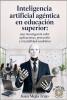
Agentic Artificial Intelligence in Higher Education: A Research Study on Applications, Protocols, and Academic Traceability analyzes how agentic AI can support university processes without replacing human intelligence, student authorship, or faculty responsibility. Its main purpose is to explain what agentic AI is, distinguish it from generative AI, chatbots, assistants, and copilots, and propose criteria for its responsible use in higher education.
The book presents agentic AI as a support architecture capable of organizing complex academic tasks, such as designing learning activities, supporting students, assisting research, reviewing evidence, generating feedback, and strengthening academic traceability. Its approach is best understood as applied and procedural research, because it develops routes, protocols, and implementation criteria rather than an empirical validation based on field data.
Across its seven chapters, the book addresses the definition of agentic AI, its use in teaching and learning, academic research, university protocols, course tutoring, rubric-based assessment, and the management of learning evidence. Its central argument is that agentic AI has educational value when it improves understanding, documents processes, respects authorship, enables human supervision, and strengthens academic quality.
Downloads
Download data is not yet available.
References
Abou Ali, M., & Dornaika, F. (2025). Agentic AI: A comprehensive survey of architectures, applications, and future directions. Artificial Intelligence Review. https://doi.org/10.1007/s10462-025-11422-4
Arowosegbe, A. A., Alqahtani, J. S., & Oyelade, T. O. (2024). Perception of generative AI use in UK higher education. Frontiers in Education, 9, Article 1463208. https://doi.org/10.3389/feduc.2024.1463208
Baptista, J. P. (2025). Human-made news vs. AI-generated news: A comparison of university students’ perceptions. Humanities and Social Sciences Communications. https://www.nature.com/articles/s41599-025-04872-2
Bittle, K., & El-Gayar, O. (2025). Generative AI and academic integrity in higher education: A systematic review and research agenda. Information, 16(4), Article 296. https://doi.org/10.3390/info16040296
Bond, M., Khosravi, H., De Laat, M., Bergdahl, N., Negrea, V., Oxley, E., Pham, P., Chong, S. W., & Siemens, G. (2024). A meta systematic review of artificial intelligence in higher education: A call for increased ethics, collaboration, and rigour. International Journal of Educational Technology in Higher Education, 21, Article 4. https://doi.org/10.1186/s41239-023-00436-z
Cano, J. R., et al. (2024). Unlocking innovation: How enjoyment drives GenAI use in innovation courses. Frontiers in Education, 9, Article 1483853. https://doi.org/10.3389/feduc.2024.1483853
Chan, C. K. Y., & Colloton, T. (2024). Generative AI in higher education: The ChatGPT effect. Routledge. https://doi.org/10.4324/9781003459026
Dify. (n.d.). Agent node. Dify Docs. Retrieved April 30, 2026, from https://docs.dify.ai/en/use-dify/nodes/agent
Dify. (n.d.). Dify Docs: Introduction. Retrieved April 30, 2026, from https://docs.dify.ai/en/use-dify/getting-started/introduction
Dong, Y. (2026). Generative AI technologies and educational outcomes: A comprehensive meta-analysis comparing traditional and AI-driven approaches. Humanities and Social Sciences Communications. https://www.nature.com/articles/s41599-026-06903-y
EDUCAUSE. (2025). 2025 EDUCAUSE Horizon Report: Teaching and Learning Edition. EDUCAUSE. https://library.educause.edu/resources/2025/5/2025- educause-horizon-report-teaching-and-learning-edition
Farinosi, M., et al. (2025). To adopt or to ban? Student perceptions and use of generative AI in higher education. Humanities and Social Sciences Communications. https://doi.org/10.1057/s41599-025-05982-7
FlowiseAI. (n.d.). Agentflow V2. Flowise Docs. Retrieved April 30, 2026, from https://docs.flowiseai.com/using-flowise/agentflowv2
FlowiseAI. (n.d.). Flowise Docs: Introduction. Retrieved April 30, 2026, from https://docs.flowiseai.com/
FlowiseAI. (n.d.). Flowise GitHub repository. GitHub. Retrieved April 30, 2026, from https://github.com/FlowiseAI/Flowise
Gao, C., Lan, X., Li, N., Yuan, Y., Ding, J., Zhou, Z., Xu, F., & Li, Y. (2024). Large language models empowered agent-based modeling and simulation: A survey and perspectives. Humanities and Social Sciences Communications, 11, Article 1259. https://doi.org/10.1057/s41599-024-03611-3
Guo, T., Chen, X., Wang, Y., Chang, R., Pei, S., Chawla, N. V., Wiest, O., & Zhang, X. (2024). Large language model based multi-agents: A survey of progress and challenges. Proceedings of the Thirty-Third International Joint Conference on Artificial Intelligence. https://www.ijcai.org/proceedings/2024/890
Haroud, S., & Saqri, N. (2025). Generative AI in higher education: Teachers’ and students’ perspectives on support, replacement, and digital literacy. Education Sciences, 15(4), Article 396. https://doi.org/10.3390/educsci15040396
Higher Education Policy Institute, & Kortext. (2025). Student generative AI survey 2025. HEPI. https://www.hepi.ac.uk/2025/02/26/student-generative-ai-survey-2025/
Ilieva, G., Yankova, T., Ruseva, M., & Kabaivanov, S. (2025). A framework for generative AI-driven assessment in higher education. Information, 16(6), Article 472. https://doi.org/10.3390/info16060472
Jisc. (2025). Student perceptions of generative AI. Jisc. https://www.jisc.ac.uk/reports/student-perceptions-of-generative-ai
Juárez, R. (2025). Dynamic assessment with AI (Agentic RAG) and iterative feedback: A model for the digital transformation of higher education in the global EdTech ecosystem. Algorithms, 18(11), 712.
https://doi.org/10.3390/a18110712
Jukiewicz, M. (2025). How generative artificial intelligence transforms teaching and influences student wellbeing in future education. Frontiers in Education. https://doi.org/10.3389/feduc.2025.1594572
Khlaif, Z. N., Alkouk, W. A., Salama, N., & Abu Eideh, B. (2025). Redesigning assessments for AI-enhanced learning: A framework for educators in the generative AI era. Education Sciences, 15(2), Article 174. https://doi.org/10.3390/educsci15020174
Langflow. (n.d.). Use Langflow agents. Langflow Docs. Retrieved April 30, 2026, from https://docs.langflow.org/agents
LangGenius. (n.d.). Dify GitHub repository. GitHub. Retrieved April 30, 2026, from https://github.com/langgenius/dify
Lee, D., Arnold, M., Srivastava, A., Plastow, K., Strelan, P., Ploeckl, F., Lekkas, D., & Palmer, E. (2024). The impact of generative AI on higher education learning and teaching: A study of educators’ perspectives. Computers and Education: Artificial Intelligence, 6, Article 100221. https://doi.org/10.1016/j.caeai.2024.100221
Lodge, J. M. (2024). The evolving risk to academic integrity posed by generative artificial intelligence. Tertiary Education Quality and Standards Agency. https://www.teqsa.gov.au/sites/default/files/2024-08/evolving-risk-to-academic- integrity-posed-by-generative-artificial-intelligence.pdf
Miao, F., & Holmes, W. (2023). Guidance for generative AI in education and research. UNESCO. https://unesdoc.unesco.org/ark:/48223/pf0000386693
National Institute of Standards and Technology. (2024). Artificial Intelligence Risk Management Framework: Generative Artificial Intelligence Profile (NIST AI 600-1). U.S. Department of Commerce. https://nvlpubs.nist.gov/nistpubs/ai/NIST.AI.600-1.pdf
OECD. (2023a). Emerging governance of generative AI in education. In OECD Digital Education Outlook 2023. OECD Publishing. https://www.oecd.org/en/publications/oecd-digital-education-outlook- 2023_c74f03de-en/full-report/emerging-governance-of-generative-ai-in- education_3cbd6269.html
OECD. (2023b). Recommendation of the Council on Artificial Intelligence. OECD Legal Instruments. https://legalinstruments.oecd.org/en/instruments/oecd-legal-0449
OECD. (2024). AI, data governance and privacy: Synergies and areas of international co-operation. OECD Publishing. https://www.oecd.org/content/dam/oecd/en/publications/reports/2024/06/ai-data- governance-and-privacy_2ac13a42/2476b1a4-en.pdf
Pérez-Pérez, I. (2026). Transparency mechanisms for generative AI use in higher education. Computers, 15(2), Article 111. https://doi.org/10.3390/computers15020111
Ranieri, M., Biagini, G., & Cuomo, S. (2025). AI literacy in higher education: A systematic approach to questionnaire development and validation. International Journal of Digital Literacy and Digital Competence, 16(1), 1–25. https://doi.org/10.4018/IJDLDC.388469
Sapkota, R., Roumeliotis, K. I., & Karkee, M. (2025). AI agents vs. agentic AI: A conceptual taxonomy, applications and challenges. Information Fusion. https://doi.org/10.1016/j.inffus.2025.103599
Smerdon, D. (2024). AI in essay-based assessment: Student adoption, usage, and performance. Computers and Education: Artificial Intelligence, 7, Article 100288. https://doi.org/10.1016/j.caeai.2024.100288
Sousa, A. E., & Cardoso, P. (2025). Use of generative AI by higher education students. Electronics, 14(7), Article 1258. https://doi.org/10.3390/electronics14071258
Taneja, S., Biswas, S. S., Alankar, B., & Kaur, H. (2025). Agentic RAG for personalized learning: Design of an AI-powered learning agent using open-source small language models. Electronic Journal of e-Learning, 23(4), 69–80.
Thüs, D., et al. (2024). Exploring generative AI in higher education: A RAG system to enhance student engagement with scientific literature. Frontiers in Psychology, 15, Article 1474892. https://doi.org/10.3389/fpsyg.2024.1474892
Toderas, M. (2025). Artificial intelligence for sustainability: A systematic review and critical analysis of AI applications, challenges, and future directions. Sustainability, 17(17), 8049.
https://doi.org/10.3390/su17178049
UNESCO. (2024a). AI competency framework for students. UNESCO. https://www.unesco.org/en/articles/ai-competency-framework-students
UNESCO. (2024b). AI competency framework for teachers. UNESCO. https://unesdoc.unesco.org/ark:/48223/pf0000391104
Yu, H., & Guo, Y. (2023). Generative artificial intelligence empowers educational reform: Current status, issues, and prospects. Frontiers in Education, 8, Article 1183162. https://doi.org/10.3389/feduc.2023.1183162
Zhu, H. (2025). Ethical risks of generative AI in education: A systematic review on identifying and mitigating ethical risks. Humanities and Social Sciences Communications. https://www.nature.com/articles/s41599-025-05252-6
Published
May 16, 2026
Series
Categories
Copyright (c) 2026 Juan Mejía-Trejo
License

This work is licensed under a Creative Commons Attribution-NonCommercial 4.0 International License.
Details about the available publication format: PDF
PDF
ISBN-13 (15)
978-970-96061-2-6
doi
10.55965/abib.9789709606126